

Five islands, and the boats between them
Of around a hundred and forty islands, five are inhabited, and about 2,200 people live between them. None is more than half an hour from the next by boat, and no two are alike. The rest belong to seals and seabirds, and you’ll find them at the end of the list.
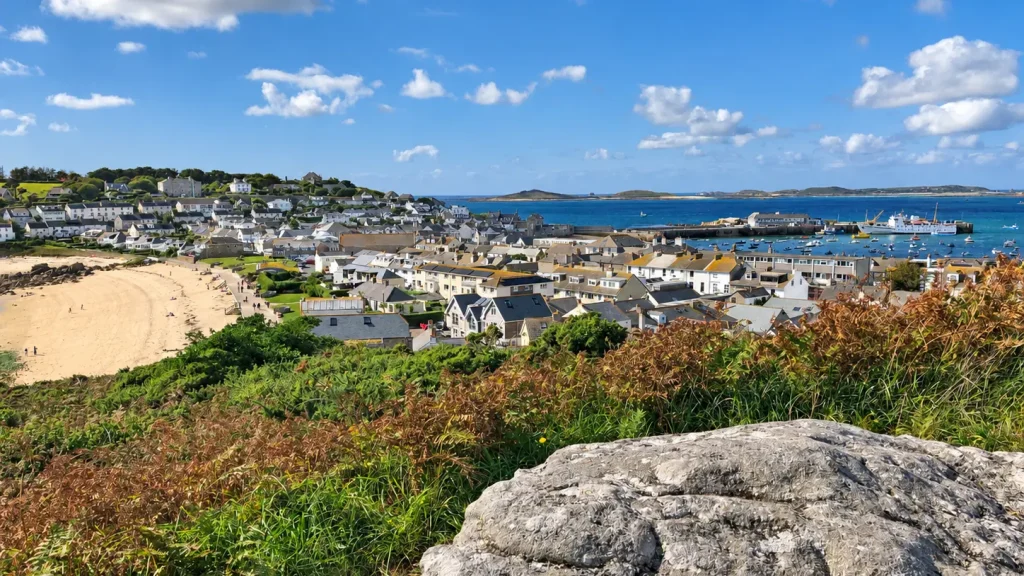
St Mary's
Hugh Town sits on a sand isthmus with a beach on either side, and everything else on the island is within an hour's walk of it. The Garrison walls, the Iron Age village at Halangy Down, Peninnis granite, and a beach for whichever way the wind is blowing.
Come for A first visit, a base for the lot of them, or a day ashore off the Scillonian
Explore St Mary's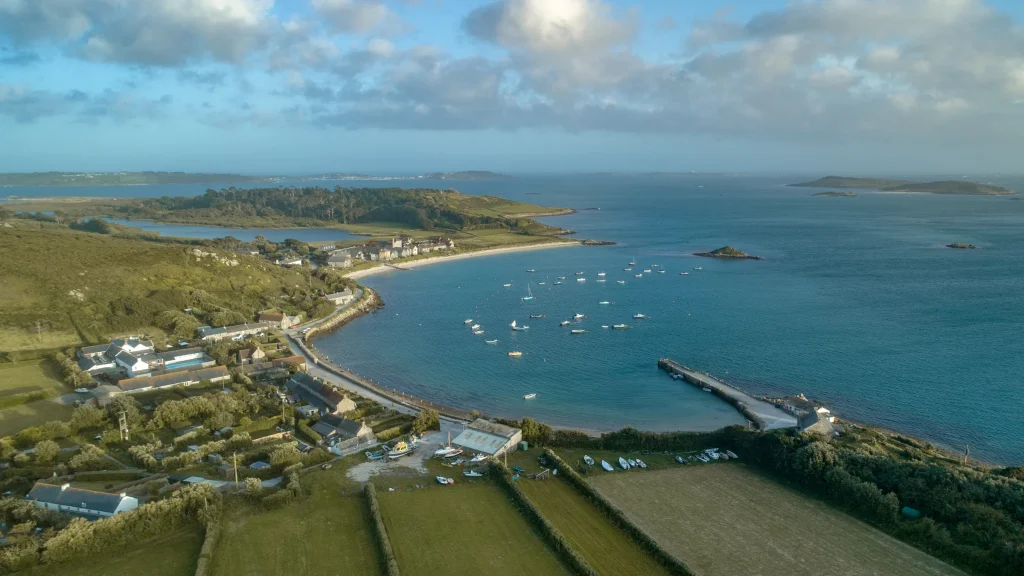
Tresco
Leased privately and run as one estate, which shows in the mown verges and the absence of cars. The Abbey Garden holds plants that survive nowhere else in Britain, and Pentle Bay is the white-sand photograph everyone comes back with.
Come for Sub-tropical planting, and the smartest beds and food in Scilly
Explore Tresco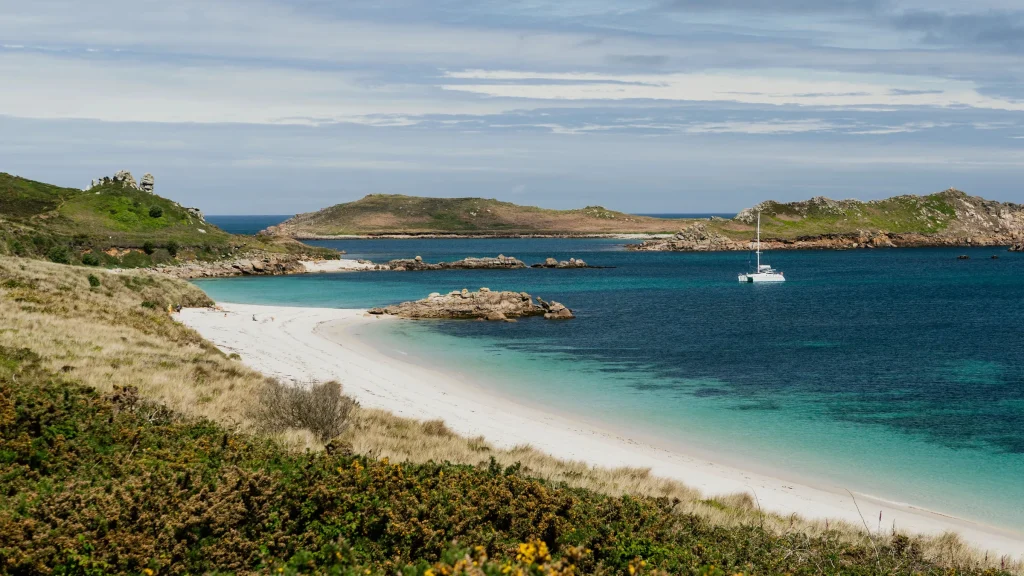
St Martin's
A high spine with beaches running off both sides: Great Bay on the north is the longest in Scilly and you can have it to yourself in August. There is a vineyard, a bakery worth the walk to Higher Town, and a dive school working the Eastern Isles.
Come for Empty sand, a vineyard, and the best baker in the islands
Explore St Martin's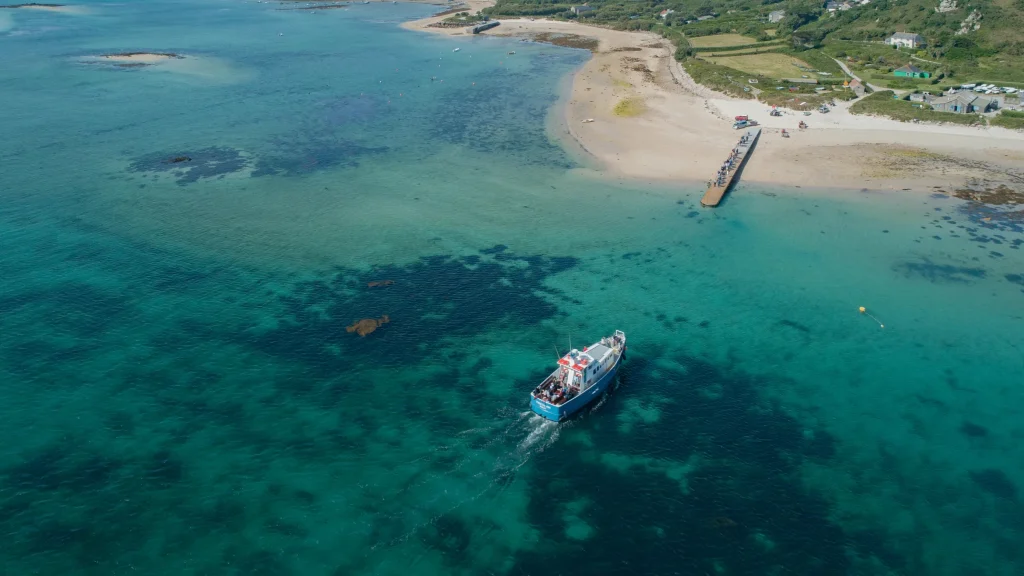
Bryher
The smallest inhabited island, and the one with two weathers at once: Hell Bay takes the full Atlantic while Green Bay a few hundred yards east stays glassy. Fraggle Rock for a pint, Veronica Farm for fudge, and a hire boat from Bennett Boatyard.
Come for Atlantic swell on one coast and flat turquoise on the other
Explore Bryher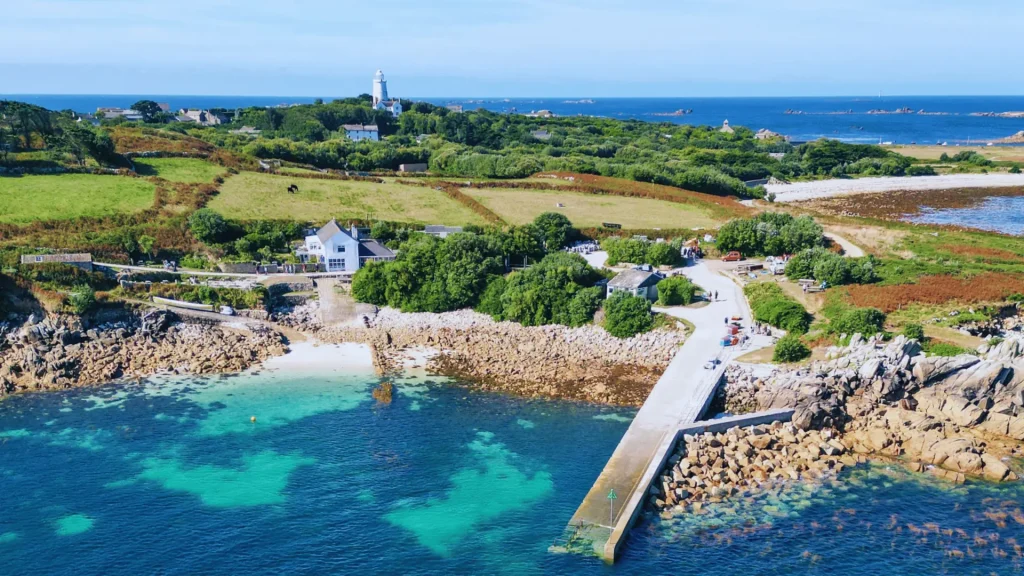
St Agnes
The most south-westerly community in Britain, joined to Gugh by a sandbar that covers at high water. A decommissioned lighthouse at the top, Troytown for farm ice cream, and the Turk’s Head above the quay for the last pint before the boat.
Come for Dark skies, a sandbar walk, and the feeling of being properly out
Explore St Agnes
The uninhabited islands
Samson’s empty cottages, the seal colonies of the Eastern Isles, puffins off Annet and Bishop Rock at the end of the map. Around a hundred and forty islands and rocks with nobody living on them, and a few you can still land on.
Come for Seals, seabirds and a beach with nobody else on it
Explore the uninhabited islands
Which island should you visit?
The names of the five inhabited islands, what each is best for, and how far it is by boat from St Mary's quay. Tap an island on the map to open its guide.
| Island | Best for | From St Mary's |
|---|---|---|
| St Mary's | A first visit, a base for everything, Hugh Town and the boats | Where most people arrive |
| Tresco | The Abbey Garden, white sand and smart places to eat and stay | 20 min |
| St Martin's | The longest beaches, seal snorkelling and dark skies | 25 min |
| Bryher | Wild Atlantic coast at Hell Bay, and a tiny island community | 20 min |
| St Agnes | The quietest: a lighthouse, farm ice cream and the sandbar to Gugh | 20 min |
Nobody lives on the rest, though boats run to Samson, the Eastern Isles and the seal colonies. The uninhabited islands →
Island hopping, honestly
How the boats actually work, before you plan a week around them.
Today's boats →St Mary's Boatmen's Association for four of the islands, and the Tresco Boating Association for Tresco. Tickets from the kiosks on the quay, or on board.
Boats out mid-morning, back mid-afternoon, with the return time given to you on the outward journey. Two islands in a day is possible but rushed.
Every sailing depends on wind and swell, and Bryher and St Agnes landings depend on the tide. The board on the quay each morning is the final word.
Tresco and Bryher are a few minutes apart and there are boats straight between them. Everywhere else, you may come back through St Mary’s, which is worth knowing before you book lunch somewhere.